Flour
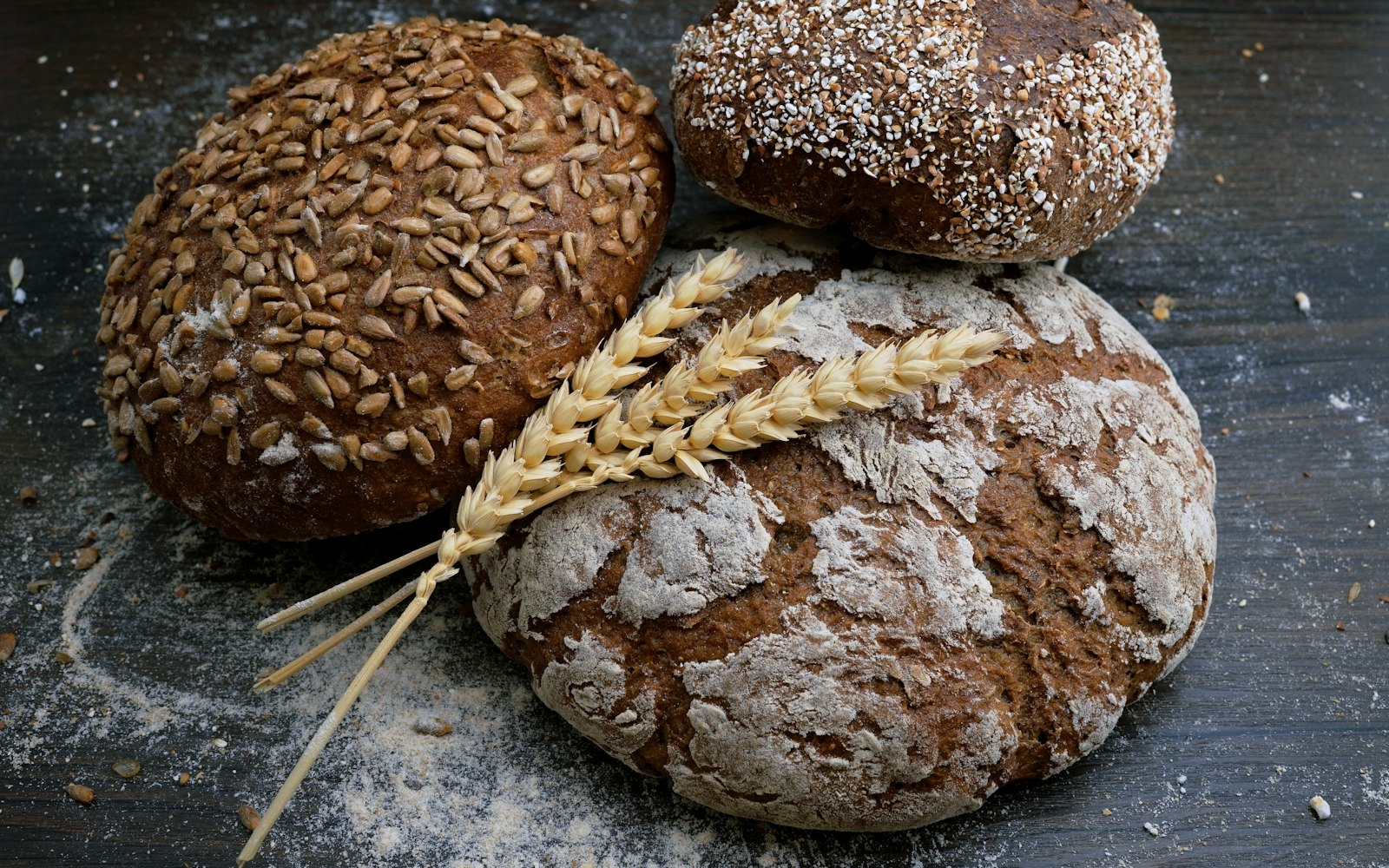
French, Belgian and Scottish flours, chosen for the loaf they are going into — from a pale baguette to a seeded Germagrain batard.
The craft
Good sourdough cannot be hurried. Our method is old and simple: a living leaven, a long ferment, and four honest ingredients.
01
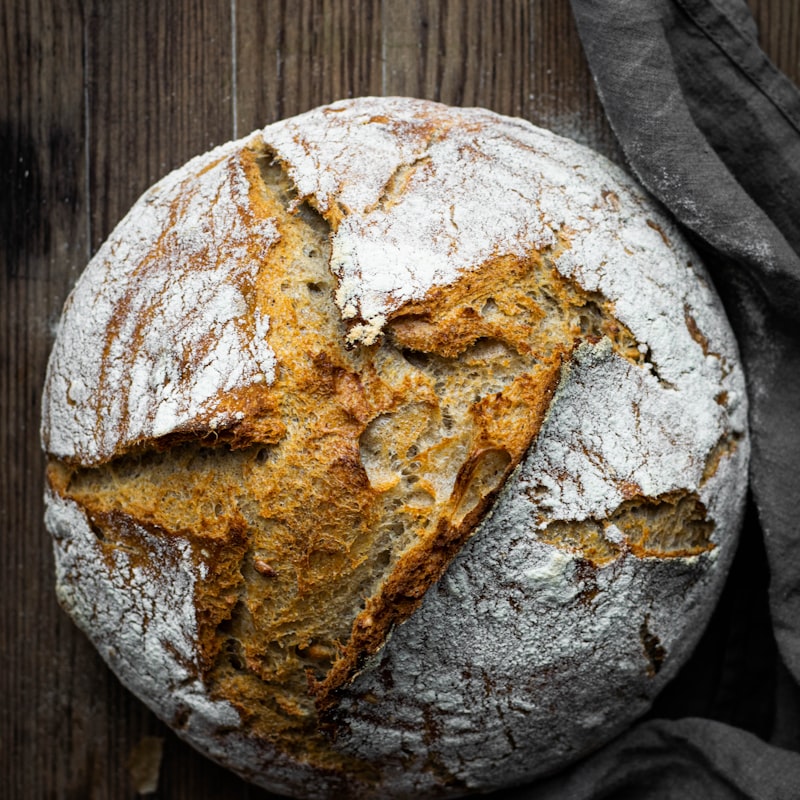
Every loaf rises on our own natural leaven — a living culture kept alive day after day for years. No shortcuts.
The leaven is fed and kept as part of the working day. It is what makes a loaf of Au Gourmand sourdough unmistakably ours: the same culture, the same patience, loaf after loaf. Commercial yeast would be quicker. We do not use it for the breads that define the bakery.
02
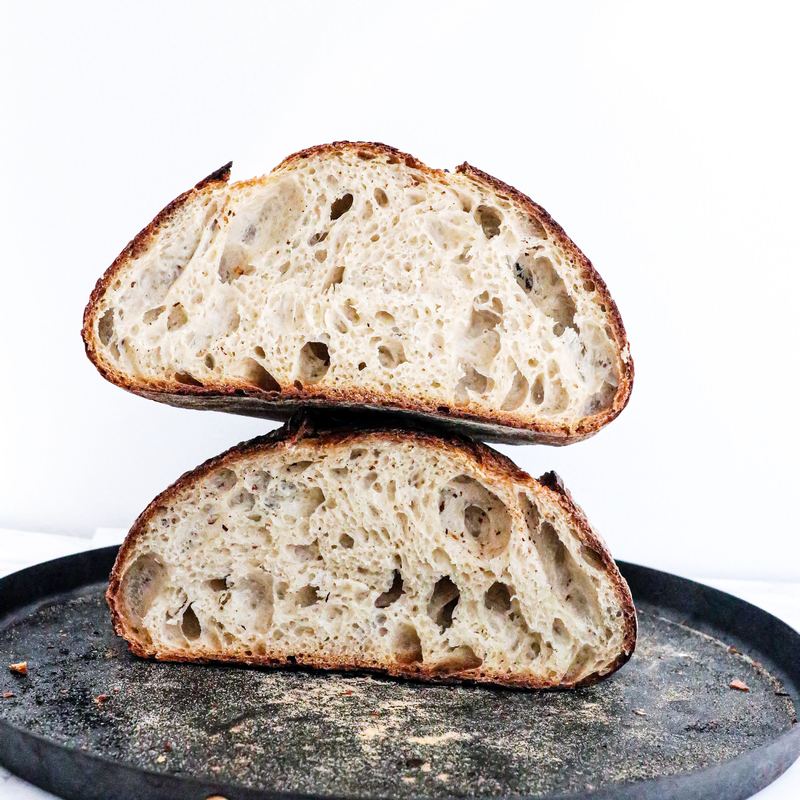
We give the dough the time it needs, often a full day or more. Slow fermentation builds flavour, structure and a crumb that keeps.
Because we ferment slowly, the sourdough develops a depth you cannot rush, and it keeps far longer than a loaf raised in a hurry. That keeping quality is one of the reasons delis and restaurants across Edinburgh are happy to put it on the counter in the morning and still slice it later in the day.
03
Flour, water, salt and leaven. That is all our sourdough asks for. The craft is in the hands and the timing, not the additives.
French, Belgian and Scottish flours, chosen for the loaf they are going into — from a pale baguette to a seeded Germagrain batard.
Edinburgh water. It is part of why the same French method tastes of this city once it leaves the oven.
Salt seasons the crumb and strengthens the dough. On focaccia it also finishes the crust, with rosemary and olive oil.
Our own natural culture, kept alive for years. It raises the loaf and gives the bakery its particular flavour.
04
Shaped, scored and baked by bakers, not machines. Around twenty breads come out of the oven this way, every baking day.
Each loaf is given the shape the dough wants: a round boule, a batard, a tin, a baguette. Scoring is done by hand so the crust opens where it should. The oven does the last of the work; the judgement before that belongs to the people on the bench.
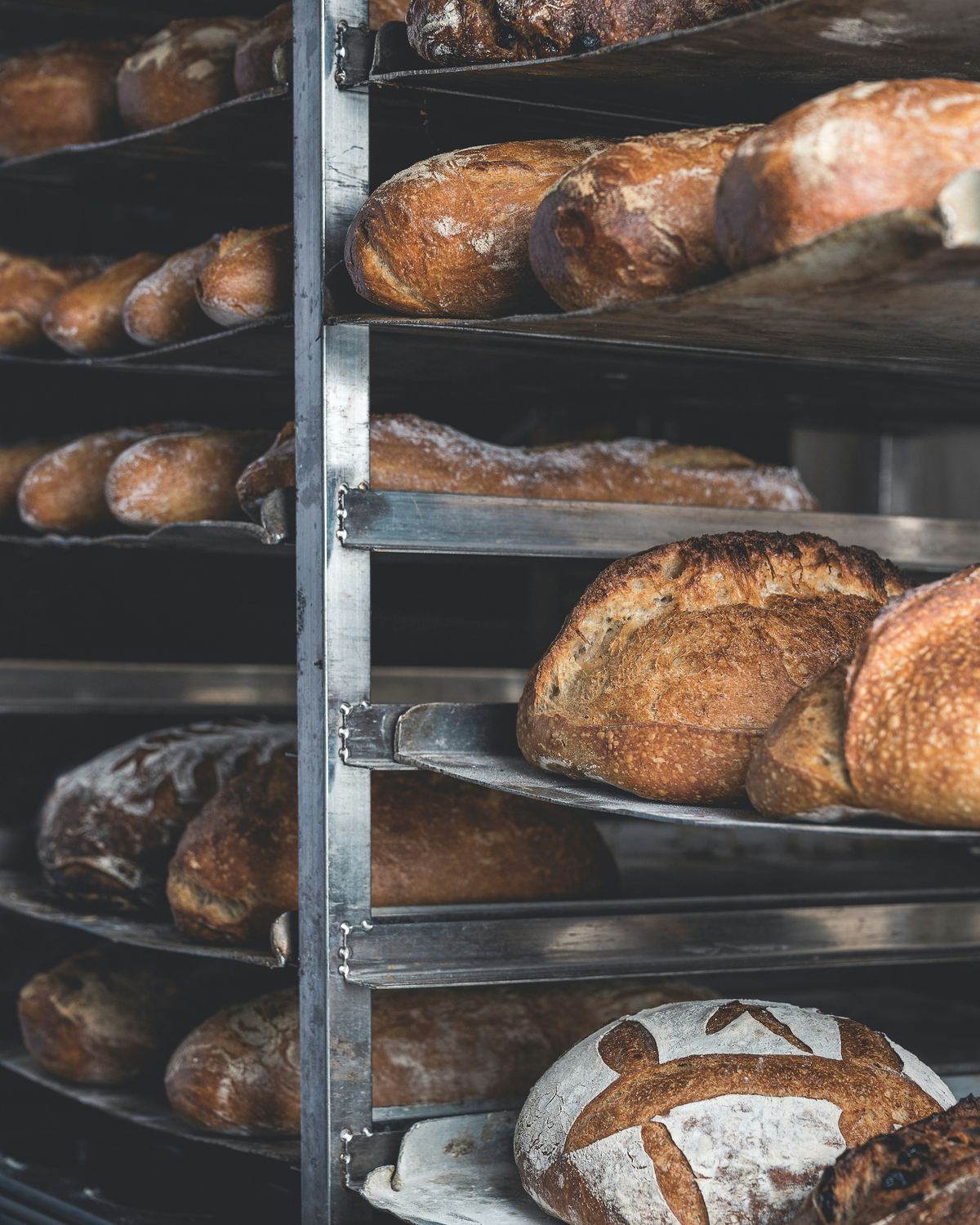
Bread is mixed and left to ferment long before anyone in the city is thinking about breakfast. Pastries are laminated, proved and baked so they are ready when the markets open and the delivery round begins.
The day before
Leaven is fed. Doughs are mixed from flour, water, salt and that leaven, then left to ferment — often through a full day — so flavour has somewhere to come from.
Through the night
Loaves are shaped, scored and baked. Viennoiserie, laminated by hand with butter, is proved slowly and baked to a deep golden shell. Nothing is par-baked elsewhere.
Early morning
Croissants and pastries come out for the day's trade. Bread leaves for delis, cafés and restaurant kitchens across Edinburgh, still from that morning's bake.
The weekend
The same bake goes to Stockbridge on Sunday and to Leith and the Grassmarket on Saturday. The best of it goes early.
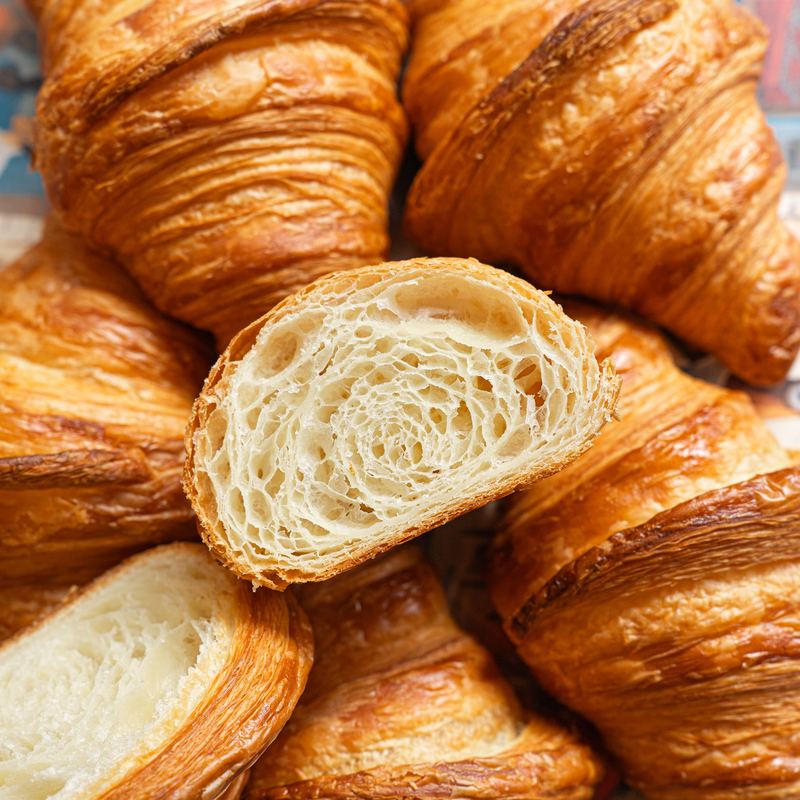
Butter croissants are laminated and folded by hand, proved slowly, and baked to a shattering, golden finish. The almond croissant, pain au chocolat, palmier, escargot and chausson all begin with that dough.
Patisserie is made in smaller batches — fruit tartlets, apple crumble pie, a dense chocolate Guinness cake — the kind of thing you take home for someone, or quietly keep for yourself.
See the pastry range